
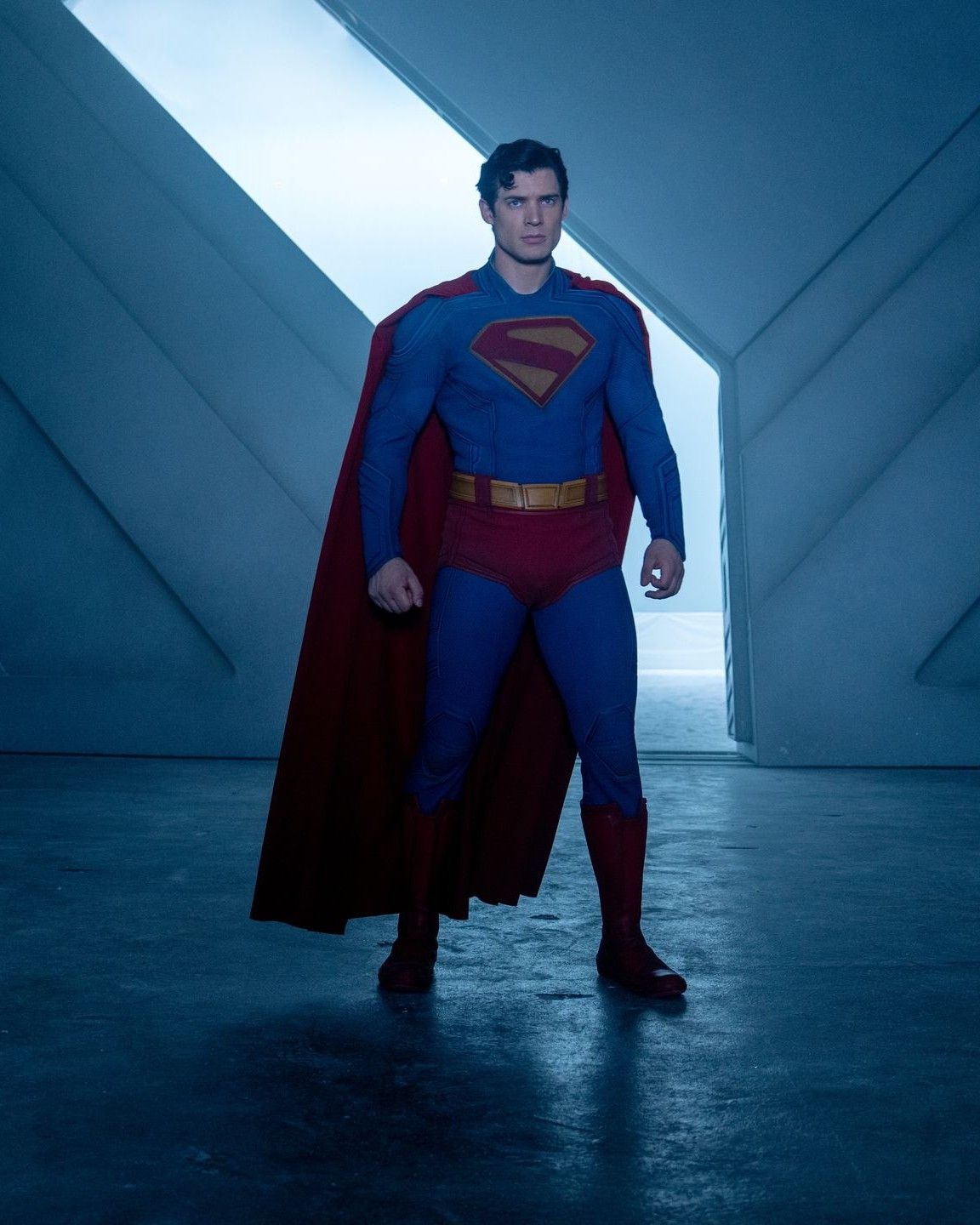
James Gunn's Superman is a success And it resembles his director in every way
There is one thing we all do, and that is putting our own vision ahead of others’. How we would have handled a situation, how we would have executed a project, what our expectations would have been, and what outcome we would have brought home. A predisposition inherent in human nature—naturally judgmental—that emerges even more strongly when one decides to take on the profession of a director. It is the quintessential role: making all the decisions, choosing on behalf of others, and no longer having to meet any expectations but your own. When this desire for individuality is fulfilled, then it can truly be said that the director has made it. Even more so when what they have done, hidden behind the camera, allows for one of cinema’s most magical powers: to be seen. From behind a screen, when one is bold enough to break through it, one can grasp what we commonly refer to as a "signature." A touch that may be the sum of skills acquired over time, of a taste so specific it becomes recognizable, of having remained true to oneself to the point of instilling a piece of oneself into every single work. This is why, when seeing the new Superman, it is absolutely and undeniably clear that it is James Gunn’s Superman. A superhero who could not belong to anyone else, and for that reason carries a coherence and sincerity that, while it may not win over everyone, is admirable and perfectly in line with what we would expect from the filmmaker, now the fresh creative director of DC Studios.
It couldn’t be otherwise. Gunn, whose past in Troma shaped his B-movie imagination, had already brought his over-the-top and playful style to another team in the now “defunct” cinematic DC Universe: The Suicide Squad (2021), a revival and lifeline for the questionable version brought to the screen by David Ayer in 2016. Not to mention an entirely original product—though wrapped in a tried and tested MCU format—in which he introduced his beloved Guardians of the Galaxy, managing to maintain consistency in their portrayal over the trilogy, despite the dramatic events and battles shared with the Avengers and the theoretically conclusive blip from some disillusioned Eternal. So James Gunn, who considers Superman so vital to the DC Universe that he turned down a project in 2018 due to its unclear vision (and instead produced the anti-Superman Brightburn in 2019), has done exactly what suits him best. He took the Kryptonian alien and placed him in a sandbox that is his own personal wonderland. He may have done what many will criticize him for, but it aligns perfectly with what any author should dare to attempt—even if not strictly adhering to every specific trait of the protagonist—which, to be fair, Zack Snyder also did, though with results many found debatable. Gunn brought to the screen a Superman that perfectly mirrors his creator. Not Bradley Cooper (in the role Marlon Brando played in 1978), nor adoptive father Jonathan Kent (this time played by Pruitt Taylor Vince), but a film that is a reflection of himself.
THEY LOVE IT, THEY LOVE SUPERMAN AGAIN https://t.co/cHEYLOwpK4 pic.twitter.com/ce8co41aor
— ClarkQuill97 (@CQuill97) July 8, 2025
Colorful and dynamic, with a suit reminiscent of the classic comic book uniform once worn by the quintessential Kal-El, Christopher Reeve, James Gunn’s Superman never loses sight of the fantastical and adventurous nature of traditional superhero films. He connects the character to today’s reality (with wars benefiting the few, social media spreading hate, the volatility of public opinion) while also tying him to something timeless and unstoppable—a vision that reinterprets in contemporary terms the society in which Clark Kent/Superman exists, yet remains narratively and structurally faithful to the classic superhero movie idea. The lead actor, a perfect David Corenswet in both look and demeanor (as is the rest of the cast), is the embodiment of kindness, of wanting to do good, of working to ensure the safety of all—beyond any jurisdiction.
so you're telling me the new superman film is earnest, well written, full of romance while staying faithful to the source material, all while being critical of american imperialism AND zionism?!
— ayan. (@artan_ayan) July 8, 2025
james gunn, you've earned my money. https://t.co/vxEw7wTqdt pic.twitter.com/rtp7LB4eTy
In a story where people are losing faith in Superman, Gunn inserts his own tricks, allowing viewers to recognize both the director and the traditional values of the heroic protagonist. The filmmaker is unafraid of his works appearing fake or completely fantastical. After all, the hero is an alien wearing trunks over tights—there couldn’t be a more inspired calling card. Thus, James Gunn introduces deliberately fake-looking creatures, a nod to his background in creature effects, gives Nathan Fillion as Green Lantern an improbable haircut, and turns Krypto into a wild, undisciplined beast who nonetheless always saves the day. And then there's the heart, so much heart. There is family, which defined his Guardians—between the ending of Vol. 3 and this Superman, between emotion and music, there is a unity of purpose. And there is the reminder that if we went to see Superman in theaters, it's because a part of us still dreams of wearing the cape and flying through Metropolis alongside the superhero. It’s no coincidence that in the film, it’s the children who look at the alien with admiration and awe—something we adults often forget we once felt. They are the ones who still have hope in this being so different from us, yet full of humanity—something the director clearly has not forgotten, and which is, in fact, how he approaches filmmaking. A perspective we, too, should try to remember, even in a crazy and violent world, now under the direction of James Gunn.