
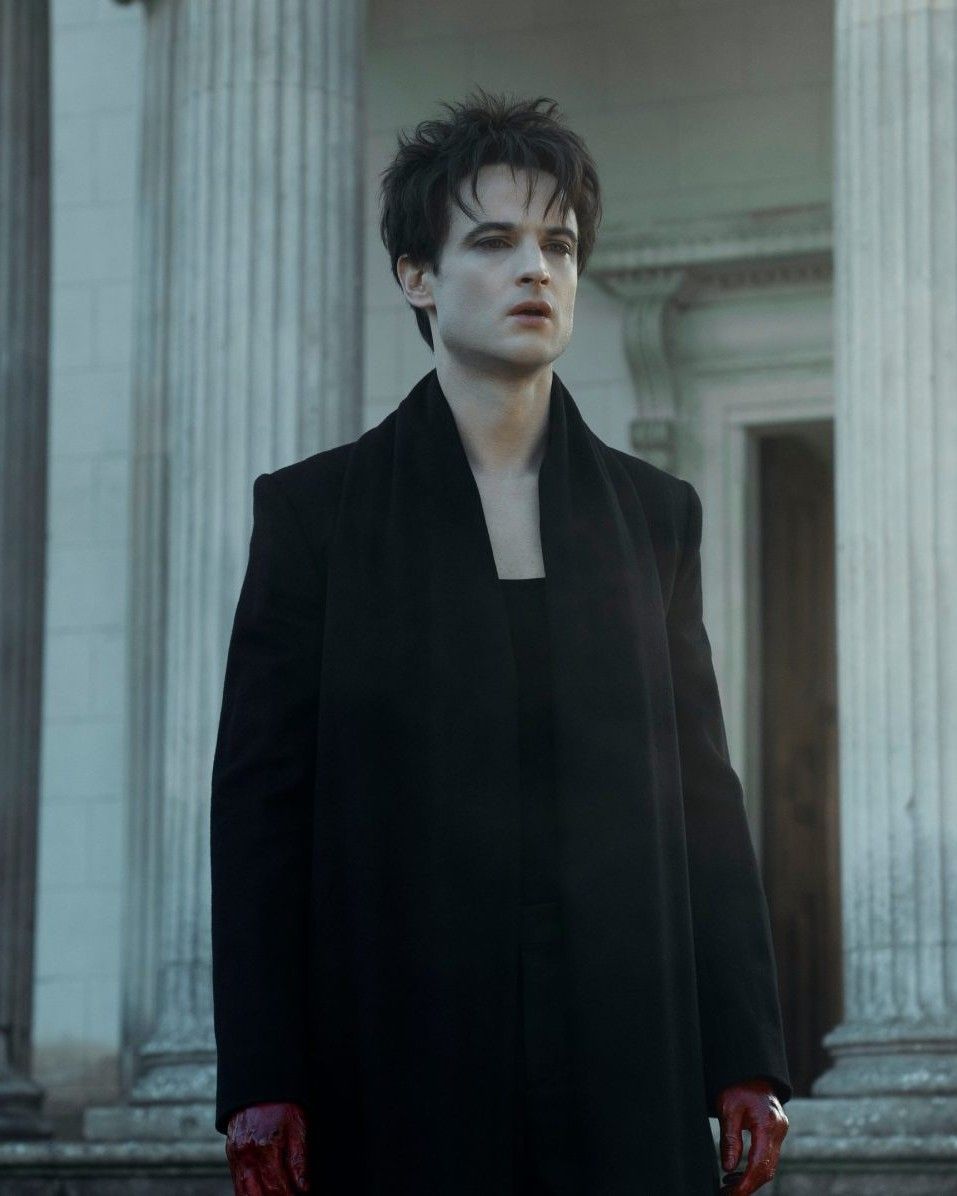
Why is no one talking about “The Sandman 2”? The arrival on Netflix, the accusations against Neil Gaiman, and the special episode Death: The High Cost of Living
No one has heard about the second season of The Sandman. Released in two parts, as has become the norm for Netflix serial products, and with a special episode set to conclude the show definitively on July 31, the imaginative and existential epic adapted from the page to the small screen has gone almost unnoticed—not because of its production quality, but due to the behavior of its creator. Conceived by Neil Gaiman, who developed it alongside David S. Goyer and Allan Heinberg, the series is based on his namesake comic book published in installments from 1988 to 1996 by DC Comics, the publishing house to which the author had entrusted the story of his Morpheus. First arriving on the platform in 2022, The Sandman was immediately met with great success, largely thanks to the appeal of the adaptation from print to serialized storytelling, supported by solid production that made it a respectable addition to the Netflix catalog—satisfying both fans and newcomers alike. The same could be said for this second season, although it fluctuates between family drama and visual choices that are not always (albeit sometimes intentionally) excellent in terms of direction and VFX—something long observed in British productions like Doctor Who, even after its transition to streaming on Disney+.
The real issue, however, is far more serious than Netflix dimming the spotlight on The Sandman. It concerns the accusations made against Gaiman—something that cannot be taken lightly. The comic book writer has been accused of sexual violence by eight women, as reported in a lengthy article by Vulture published in recent months.
But it wasn’t the first time. In 2024, during a podcast produced by Tortoise Media, his public image had already been damaged by accusations from five women who accused him of the same crime. Although unfortunately such reports have become increasingly common—especially since the rise of the MeToo movement (and no, not because women want visibility, but because it’s time to bring certain power dynamics into the light)—what makes Gaiman’s situation heavier is the violent and disturbing nature of the allegations. The author allegedly engaged in non-consensual sexual acts with some employees, with his ex-wife aware of her husband’s inappropriate behavior. As of today, none of the allegations brought forward have received a court ruling, and the writer categorically denies any wrongdoing. Despite the presumption of innocence, Netflix’s strategy has been to quietly release the second and final season of The Sandman. According to showrunner Heinberg, the decision to end the series had already been made when the creative team realized they didn’t want to continue a storyline without Dream at its center, thus condensing everything into eleven episodes. True or not, it turned out to be a fortunate outcome for the platform, which completed the series and moved on without backlash. What did get canceled, however, was the second season of Dead Boy Detectives, also by Gaiman and also on Netflix, but halted before the accusations surfaced—unlike the third season of Good Omens, initially confirmed but later converted into a 90-minute film. Among Gaiman’s upcoming adaptations, only Anansi Boys has remained in production, with a release expected by 2025 on Prime Video, while publisher Dark Horse Comics has announced the end of its thirty-year collaboration with the author.
@tortoisemedia On recorded calls, Neil Gaiman tells a woman he allegedly sexual assaulted that he “obviously fucked up”, offers her $60,000 for her therapy, and promises to make a “hefty donation” to a rape crisis centre. Listen to episode six of Master. #neilgaiman #americangods #goodomens #coraline #BookTok
original sound - Tortoise
In any case, it feels as though a shadow has fallen over the realm of the Lord of Dreams, just as happens in the continuation of his story, this time focused on the inevitable changes of existence, even when one is an Endless. It is precisely the paradox between content and real-life events that frames the second season of The Sandman—the introspective depth that has always defined Gaiman’s signature and his ability to merge fantasy and mythology with themes so universal that they speak to both the whole and the particular, diving into the specific while remaining broadly relatable. This also happens with the return to the realm of the character played by Tom Sturridge, constantly tormented by his inescapable inner turmoil, now directed toward understanding change and how no one remains still in their life, immortal or not.
Finished the second part of season 2 of The Sandman series. It’s an absolutely perfect ending for any series 100/10 masterpiece! It made me cry. pic.twitter.com/8GFzvkTlyJ
— Kishalan Fire (@kishalan96167) July 25, 2025
A product that therefore clashes with what is known about its creator and the clarity of its circular, deeply accurate analyses that drive both plot and characters—fascinating even if the story might feel slightly overextended. This, along with packaging that does not reflect the quality of the writing, which in turn risks becoming somewhat repetitive. And perhaps it’s no coincidence—since The Sandman also deals with fate (one of Morpheus’ siblings)—that the series ends with an episode that is a long-awaited dream come true for Neil Gaiman, perhaps his last professionally speaking, finally granting him his Morpheus. The show will officially conclude with the special episode Death: The High Cost of Living, an adaptation of the comic miniseries dedicated to Sandman’s sister, Death. Initially, in the early 2000s, the project was set to become a feature film with executive production by Guillermo Del Toro, but the 2007–2008 writers’ strike halted the industry and pushed the project to its demise in 2010. Could this be Gaiman’s last wish come true? If he truly were guilty, it would be a fitting conclusion to his idea of an order that governs chaos.